
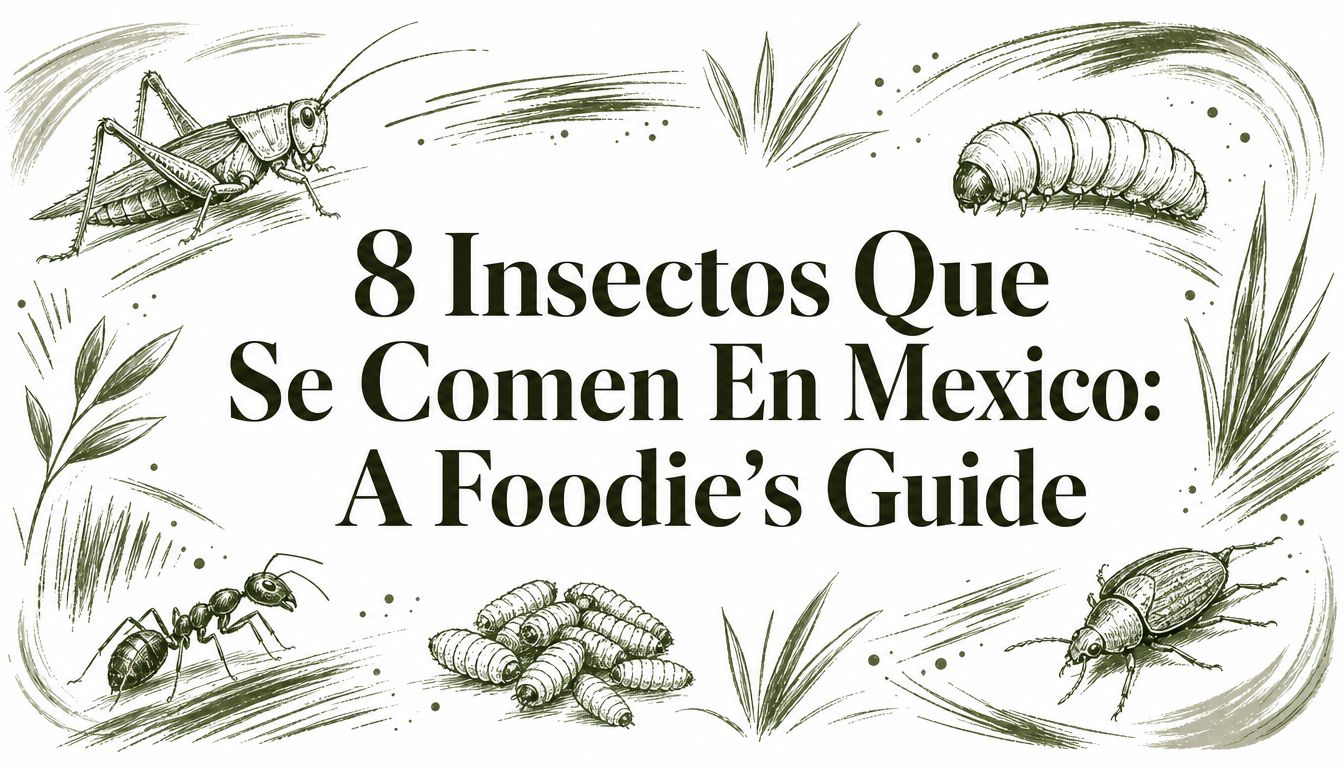
Have you noticed how the conversation about Mexican food usually stops at tacos, mezcal, and mole, even though some of the country's most interesting flavors come from insects? In Mexico, insectos que se comen en Mexico are not a stunt or a tourist trick, they're part of a long food tradition documented across regions, ecosystems, and generations, with recent summaries citing 504 to 549 edible species and roughly one-quarter of the world's documented edible insect species concentrated in one country (source). That matters because it changes the way you eat here. You're not trying a gimmick, you're stepping into a living culinary system.
The best approach is practical, not performative. Start with the easier, more familiar flavors, then work toward the bolder ones. In Mexico, edible insects show up as snacks, salsa ingredients, fillings, and premium restaurant plates, and regional survey data suggest that consumption is still mainstream in parts of the country rather than purely niche, especially in the Center-South (source). If you're staying in Tulum, that context helps a lot, because the right base makes it easier to move between local markets, town food spots, and more polished dining rooms without turning the day into a logistics problem. For travelers who want that kind of balance, a boutique hotel experience in Tulum can make food exploring feel easy instead of rushed.
1. Chapulines (Grasshoppers) – Toasted and Seasoned
Chapulines are the easiest place to start if you want a first bite that still feels distinctly Mexican. They're toasted grasshoppers with a crisp bite, a savory edge, and enough lime and salt to make the flavor feel familiar even before you know what you're eating. In Oaxaca, they show up in everyday cooking, and Mexican culinary coverage regularly places them in tacos, tlayudas, guacamole, and snack cones sold in markets and street stalls (source).
The taste is straightforward, but the texture is what usually wins people over. A well-made chapulín stays crisp instead of turning dusty, which is why it works so well on a warm tortilla, scattered over guacamole, or eaten straight from a cone. Seasoning matters too, because heavy chile can cover the grasshopper's own flavor. If you want the cleanest read, start with the toasted version, then try more dressed preparations after that.
A little sourcing sense goes a long way in Tulum. Buy from vendors who keep their products dry and protected, and check that the insects look crisp rather than soft or damp. In town, you'll also find chapulines sold as packaged souvenirs or folded into casual plates, so they're easy to try without planning a special meal. If you want to pair that with a more food-focused stop, Aldea Zama restaurants can be a practical place to look, since that area often gives travelers a wider range of menus and a calmer setting than a rushed street search.
Start with a small portion. The flavor is friendly, but the ingredient is still new to many travelers, and it helps to judge the seasoning before ordering a second round.
Practical rule: If chapulines taste stale, the issue is usually storage, not the ingredient itself.
2. Gusanos de maguey and why they feel so special
Gusanos de maguey are the kind of ingredient that reminds you how specific Mexican food can be. They come from agave plants, and Mexican sources describe them as a high-value specialty with strong scarcity premiums, not a common commodity (source). That alone explains why the flavor gets treated with care. When they're properly prepared, you get smoke, salt, and a rich, almost concentrated agave character.
The commercial side matters too. One government source says roughly 95 species are regularly commercialized in Mexico, and gusano products sit inside that broader market of regional, high-value foods (source). For travelers, that means you're more likely to encounter them in places that treat them as a serious ingredient, not a novelty topping. Think market stalls, mezcal bars, and restaurants that already know how to handle regional heritage foods.
What to look for before you order
- Ask how they're prepared: Roasted, fried, or ground into salt all give different results.
- Watch for freshness: The best versions are served promptly, not left sitting.
- Expect a deeper flavor than chapulines: Gusanos are richer and more earthy.
A lot of first-timers do better with gusanos in small amounts, especially when paired with tortillas or mezcal. In a food trip, they're one of the dishes that rewards patience. The texture is part of the appeal, but so is the setting.
3. Choosing a base for a Tulum food adventure
Where you stay shapes how well you eat. In Tulum, one stop might be a market stall serving a quick bite, while another is a more polished tasting plate, and the gap between them affects how much you enjoy the day. If you want to try insectos que se comen en Mexico and still leave room for cenotes, beach time, and evening meals, pick a base that lets you move easily without giving up quiet time.
Neighborhood choice matters for that reason. A good calm base in Tulum gives you a place to cool off after a long, hot afternoon of tasting and walking, especially if you've had richer foods or spent hours in the sun before dinner. If you want to move easily between local spots and more polished dining rooms, a well-positioned base between town and beach can make the trip feel lighter. For a practical way to think about a base for exploring Tulum, focus on whether the area saves you time and keeps your energy steady. That matters when you're planning to try unfamiliar dishes and still keep the rest of the day flexible.
The best approach is straightforward. Try your bolder dishes earlier in the evening if you still plan to go out later. Keep water close by. Don't try to stack every unusual bite into one day, because Tulum rewards pacing. The heat, the road movement between places, and the slower rhythm of a food-focused day all make restraint useful rather than restrictive.
4. Jumiles are intense, earthy, and worth respecting
Jumiles are small shield bugs, and they're one of the most characterful insect foods in Mexico. Mexican culinary coverage places them in mole, salsa, and other regional preparations, especially in Guerrero, where they're tied to local eating habits (source). The flavor is not mild. It leans aromatic, earthy, and slightly floral, which is why people often crush them into a sauce instead of serving them whole.
That format makes sense. In a salsa, jumiles integrate better with avocado, onion, cilantro, or chile, and the result is more balanced than eating them alone. If you're new to them, that's the right route. A spoonful of jumil salsa on a tortilla gives you the flavor without overwhelming your palate.
Jumiles are best treated like a seasoning ingredient, not a novelty snack.
In market settings, the key question is freshness. These insects are seasonal, and the best versions usually come from people who know the local cycle well. If a vendor can explain where they were gathered and how they were handled, that's a stronger sign than any flashy presentation. For diners in Tulum, that same logic applies at the table. Ask what the salsa is paired with, because jumiles can dominate a dish if the kitchen doesn't balance them carefully.
5. Chicatanas bring a rainy-season intensity
Chicatanas are associated with the rainy season and with the kind of seasonal eating that still feels very local. Mexican coverage describes chicatanas as a coveted regional ingredient used in moles, tacos, sopes, and snacks, especially in southern Mexico (source). They're not subtle. They have a strong, roasted depth that works best when the kitchen gives them room to speak.
The practical side matters here because chicatanas are one of those dishes that can disappoint if they've been held too long. Fresh handling is everything. When they're good, they carry a rich, slightly sweet note and a texture that feels satisfying rather than dusty. When they're old or over-seasoned, the whole thing gets muddled.
How to order them well
- Prefer simple preparations: Salt and lime let the flavor stand out.
- Ask about the day's catch: Seasonal foods should be handled fresh.
- Watch the texture: Well-cooked chicatanas should still feel lively, not soggy.
In places near cenotes or rural communities, chicatanas can show up in ways that reflect the season more than the menu. That's part of the appeal. You're not chasing a standardized restaurant item, you're eating what a place has at that moment.
6. Why edible insects fit so naturally into Mexican food culture
Mexican cooking already makes room for bold flavors, so edible insects fit in without feeling forced. Mole, salsa, roasted chiles, and toasted seeds teach the palate to handle smoke, heat, bitterness, and depth in the same bite. In that setting, insects make sense in practical ways too, crisped as a snack, ground into paste, or folded into broths and tortillas, which is why they read as part of the table, not as a curiosity brought in from outside (source).
The historical side is just as important. Mexican records and summaries place edible insect traditions in long continuity with pre-Hispanic foodways, and colonial-era descriptions also documented them, which shows the practice predates modern gastronomic branding by centuries (source). That continuity is why these dishes feel rooted instead of experimental. They were part of local eating long before travelers started looking for them.
For a visitor, the lesson is straightforward. Judge an insect dish by how it is cooked, where it is served, and whether the cook understands the ingredient's texture and seasonality. In Tulum, that usually means asking at markets, checking which dishes are made fresh that day, and comparing a casual snack with a more deliberate restaurant preparation. A quick read like this first-time visitor's guide to Tulum can also help you match tasting plans with the pace of your trip. That approach gives you a better meal than treating the insect itself as the only point of interest.
7. What Travelers Often Miss
What do travelers usually overlook first? The answer is the practical side of eating insects. Seasonality changes what is available, so a menu that looks exciting online may have very little relationship to what a kitchen can serve that day. The same ingredient can also taste and feel quite different depending on whether it arrives toasted, boiled, fried, or ground into salsa, so the method matters as much as the insect itself.
Food safety deserves the same attention. A lot of coverage celebrates the tradition but skips the basic questions that help you eat with confidence, such as which species are easier to mix up, how the ingredients were handled, and which preparations are generally cleaner. Ask where the insects came from, whether they were cooked that day, and how the kitchen prefers to serve them. If a dish is meant to be mixed into something else, that usually changes the texture and the experience in a good way.
Travel rhythm matters too. If you are staying in a quieter part of town, you can sample during the day, return to a calm room, and keep dinner plans open instead of forcing every meal into a rushed schedule. For first-time visitors, a quick read of this practical Tulum guide for first-time visitors helps you pair tasting stops with the pace of the trip. That makes it easier to enjoy the food for what it is, rather than treating it like a checklist item.
8. Other regional bites worth knowing
Not every edible species has the same level of visibility, but Mexico's insect food map is bigger than the best-known names. Mexican sources note at least 88 beetle species eaten in the country, and culinary coverage also points to cocopaches, escamoles, and other regional preparations that appear in salsas, fillings, and moles (source). That kind of range matters because it shows how local the category really is. There isn't one single “insect dish,” there are many.
Escamoles, for example, are often treated as a luxury ingredient because of how seasonal and labor-intensive they are. Cocopaches and related beetles may show up in dishes where their flavor is folded into something richer, not spotlighted on their own. In practice, that means the best way to understand these foods is to ask what role the insect plays in the dish. Is it the main event, a garnish, a base, or a seasoning element?
The most interesting insect dishes aren't always the ones served most dramatically.
That perspective helps in Tulum too. Market stalls, snack counters, and dining rooms each reveal a different side of the food culture, and the experience changes depending on whether you want a quick bite or a slower, more guided meal.
9. How to pair these foods with a travel rhythm that makes sense
Trying unusual food goes better when the rest of the day has room to breathe. If you plan to eat chapulines at lunch and then head toward a sunset meal later, your base should make the day feel easier, not busier. A quieter stay can help food-focused travelers do that, especially when you want a cool, calm place to return to after a humid afternoon out. The right location saves energy, and that leaves more of it for asking questions, trying another bite, and staying open to local suggestions.
Tulum's pace can catch people off guard. A short distance on the map can feel longer once heat, humidity, and evening traffic enter the picture. Plan the day around that reality. Start with the more delicate dishes while you're fresh, save the stronger and more aromatic flavors for later in the day, and keep water handy if you are moving between stalls, beach areas, and dinner stops. Morning market visits work especially well here, because you can ask what is fresh, compare prices without rushing, and eat before the day gets too hot.
For first-time travelers, that rhythm makes the experience better. You do not need a perfect list, and you do not need to chase every dish in one day. You need enough structure to enjoy the food and enough flexibility to follow the stall that looks busiest, the cook who can explain a preparation clearly, or the local advice that points you toward the most convincing version of the dish.
Comparison of 10 Mexican Edible Insects
| Item | Preparation Complexity 🔄 | Resource & Availability ⚡ | Expected Outcomes (Nutrition & Flavor) 📊⭐ | Ideal Use Cases 💡 | Key Advantages ⭐ |
|---|---|---|---|---|---|
| Chapulines (Toasted & Seasoned) | Low 🔄, simple to toast and season | Low ⚡, widely available; summer peak | Protein-rich (~15g/100g); crunchy, mild 📊⭐⭐⭐ | Snacks, taco toppings, salads 💡 | Sustainable, shelf‑stable, accessible ⭐⭐⭐ |
| Gusanos de Maguey (Roasted with Spices) | Medium 🔄, cleaning and roasting required | Moderate ⚡, seasonal; specialty supply | High protein (~20%); smoky, nutty 📊⭐⭐ | Mezcal pairings, premium dishes 💡 | Distinctive flavor; premium authenticity ⭐⭐ |
| Jumiles (Crushed into Salsas) | Low 🔄, crush fresh; no cooking | Low-to-Moderate ⚡, highly seasonal (autumn); perishable | Intensely aromatic, floral-earthy; condiment impact 📊⭐ | Fresh salsas, corn-based foods (tlacoyos) 💡 | Unique, memorable flavor; regional identity ⭐⭐ |
| Chicatanas (Boiled & Seasoned) | Low 🔄, boil and season | Moderate ⚡, very seasonal (rainy months); regional | Sweet, umami-rich; tender meat; caloric 📊⭐⭐ | Seasonal feasts, simple boiled preparations 💡 | Strong cultural tradition; rich nutrition ⭐⭐ |
| Huevos de Hormiga (Stewed in Broths) | High 🔄, labor-intensive harvest & cleaning | High ⚡, highly seasonal; limited distribution | Extremely nutrient-dense; delicate, buttery flavor 📊⭐⭐⭐ | Traditional corn broths, ceremonial stews 💡 | Exceptional nutrition; supports indigenous practices ⭐⭐⭐ |
| Gusanos de Henequén (Fried Crispy) | Low 🔄, frying; straightforward | Low-to-Moderate ⚡, regional (Yucatán) | Crispy, nutty snack; higher fat from frying 📊⭐ | Fried snacks, appetizers, street food 💡 | Approachable format; uses agricultural byproduct ⭐⭐ |
| Acociles (Boiled in Broths) | Low 🔄, simple boiling into broths | Moderate ⚡, cenote/spring dependent; seasonal | Delicate sweet flavor; gelatinous, nutrient-rich broth 📊⭐ | Traditional soups and stews; cenote community dishes 💡 | Deep broth flavor; Maya culinary link ⭐⭐ |
| Escarabajos (Boiled & Ground into Moles) | High 🔄, requires culinary skill to integrate | Variable ⚡, species-dependent; limited supply | Adds umami depth and subtle nutty notes to moles 📊⭐ | Complex moles, ceremonial/family recipes 💡 | Enhances sauce complexity; ancestral technique ⭐⭐ |
Your Next Culinary Chapter in Tulum
Insectos que se comen en Mexico are part of a food culture that's old, regional, and still very much alive. Start with chapulines if you want something easy, then work toward jumiles, chicatanas, or gusanos once you understand how Mexico layers seasoning, texture, and seasonality. The more you pay attention to sourcing and preparation, the better the experience gets.
If you're planning a trip to Tulum, build your stay around pace as much as place. A thoughtful base gives you room to explore local food without feeling rushed, and that matters when you're eating dishes this tied to place and season. Plan well, stay curious, and let Tulum's rhythm guide how far you want to go.
Leave a Reply